

Building a startup is not only about finding customers and increasing sales. A growing business also has to understand how much it costs to operate, how much cash is available, what future expenses may look like, and whether planned expansion is financially realistic.
This is where startup booted financial modeling can play an important role. In this article, the phrase refers to financial modeling for a bootstrapped or self-funded startup. Bootstrapping means relying on the founder’s or business’s available resources rather than depending entirely on outside investment. The U.S. Small Business Administration recognizes self-funding as one of the ways entrepreneurs can finance a business.
A financial model organizes assumptions about revenue, expenses, cash flow, and other financial information into projections. These projections can help a founder evaluate different possibilities before making major business decisions. SCORE describes financial projections as a planning tool for estimating income and expenses, assessing profitability, setting financial goals, and preparing for financing.
What Is Startup Booted Financial Modeling?
Understanding the Concept of Financial Modeling
Financial modeling involves creating financial projections from business assumptions and available information. For a startup, those assumptions can relate to expected sales, pricing, operating expenses, payroll, startup costs, capital spending, and other financial factors.
The goal is not to produce a perfect prediction. Future results are uncertain, particularly for a new business. Instead, the model gives the founder a structured way to examine possible financial outcomes.
How Financial Models Work for Startups
A startup financial model starts with inputs and assumptions. Those assumptions are then used to produce projected financial results.
For example, a startup may estimate future sales based on expected customers and pricing. Startup Booted Financial Modeling can then estimate the costs required to deliver those sales and calculate the resulting cash flow and profitability.
Why Startups Use Financial Models for Growth Planning
Growth can require additional spending before the financial benefits appear. A business may need more employees, equipment, inventory, marketing, or working capital as Startup Booted Financial Modeling expands.
Financial modeling helps a founder examine these requirements in advance. The SBA recommends developing financial projections as part of business planning and using them to support funding requests and explain future financial expectations.
Why Financial Modeling Is Important for Startup Growth
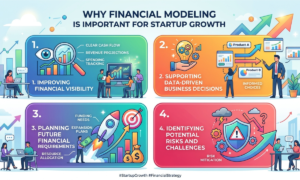
Improving Financial Visibility
A financial model can give a founder a clearer view of expected revenue, expenses, cash balances, and financial requirements. Cash-flow forecasting is particularly useful because Startup Booted Financial Modeling focuses on the timing of cash entering and leaving the business. SCORE’s current cash-flow resources are designed to help businesses project receipts, expenses, and ending cash balances and identify potential cash shortages.
Supporting Data-Driven Business Decisions
Financial modeling can help connect a proposed decision with its potential financial consequences. For example, a founder considering a new employee can add the expected compensation and related costs to the model. A marketing investment, equipment purchase, or expansion plan can be evaluated in a similar way.
Planning Future Financial Requirements
Growth can change the amount of capital a business needs. SCORE’s cash-flow projection resources include revenue, operating expenses, capital expenditures, startup costs, and cash balances to help entrepreneurs estimate financial requirements and evaluate funding needs.
Identifying Potential Risks and Challenges
Financial modeling can also be used to test assumptions. If a startup expects rapid revenue growth, for example, the founder can examine what happens if sales are lower than expected or expenses are higher than planned.
SCORE recommends considering different scenarios and understanding the assumptions behind financial projections rather than treating forecasts as guaranteed results.
Key Elements of a Startup Financial Model
Revenue and Sales Forecasts
Revenue forecasting estimates how much income the business expects to generate. The assumptions should have a logical connection to the company’s business model. Depending on the company, relevant factors can include pricing, expected sales volume, customers, market conditions, and capacity.
Operating Costs and Expenses
Expenses represent the costs required to operate the company. Depending on the business, these may include payroll, rent, software, marketing, materials, production costs, professional services, and other operating expenses.
Cash Flow Projections
Cash-flow projections estimate the movement of cash through the business. This is different from simply looking at projected profit. A business can have revenue and still experience a cash shortage if payments arrive later than expenses become due.
Profit and Loss Forecasts
A projected profit-and-loss statement estimates revenue, expenses, and the resulting profit or loss over a period. SCORE’s financial projection model includes projected income statements alongside cash-flow statements and balance sheets.
Break-Even Analysis
Break-even analysis estimates the sales level at which relevant revenue and costs balance. It can help a startup understand how much Startup Booted Financial Modeling needs to sell to cover its costs under a particular set of assumptions. SCORE includes break-even analysis in its financial projection resources. The result is an estimate based on the assumptions used in the calculation, not a guarantee that the business will reach that point.
Funding and Capital Requirements
A financial model can also help estimate how much capital a startup may require. For businesses seeking outside funding, the SBA recommends clearly explaining funding requirements and how the money will be used. The SEC similarly advises companies preparing to raise capital to calculate their runway needs based on projected expenses and explain how the proceeds will be used.
How Startup Booted Financial Modeling Helps Businesses Plan for Growth
Setting Realistic Growth Goals
Growth targets become more useful when they are connected to measurable financial assumptions. Instead of simply saying that revenue should increase, a founder can examine what sales volume, pricing, staffing, and expenses would be required to reach the target.
Forecasting Future Revenue and Expenses
A growth plan should consider both expected income and expected costs. A startup that forecasts only revenue may overlook the additional expenses required to generate and support that revenue. Financial modeling brings those estimates together.
Managing Cash Flow During Expansion
Expansion can increase cash requirements even when sales are rising. Additional employees, inventory, equipment, marketing, and other operating needs may require cash before the related revenue is received. SCORE’s 12-month and 24-month cash-flow resources specifically support forecasting cash receipts, expenses, and ending balances while planning for growth.
Planning Hiring and Operational Costs
Hiring can increase a company’s recurring expenses. A financial model allows the founder to include expected compensation and other relevant costs in the forecast and examine how the decision could affect cash flow and profitability. SCORE’s financial projection model specifically includes salaries and wages as part of its startup financial inputs.
Evaluating New Products and Markets
A startup can use financial projections to examine the potential financial effects of entering a new market or launching a new product. The analysis can include expected revenue alongside the costs required to produce, market, distribute, and support the new offering. The SBA recommends considering market information, pricing, customer behavior, capacity, revenue streams, and cost estimates when building projections.
Measuring the Financial Impact of Growth Decisions
A financial model can be used before a decision and reviewed afterward. Once actual financial results become available, the founder can compare them with the original projections. SCORE recommends regularly comparing projections with actual financial statements and adjusting forecasts when assumptions prove too optimistic or pessimistic.
How to Build a Startup Financial Model
Define Business Goals and Assumptions
Start by identifying what the model needs to answer. The goal could be understanding future cash needs, evaluating a hiring plan, estimating profitability, planning expansion, or determining whether additional funding may be required. Document the assumptions behind the numbers so they can be reviewed and changed when new information becomes available.
Gather Relevant Financial Information
Use the most relevant information available. For an established startup, this may include actual sales, expenses, payroll, pricing, customer activity, and cash balances. A new startup may need to rely more heavily on market research, industry information, government data, and reasonable estimates.
Create Revenue Projections
Build revenue projections around the actual business model. Consider the factors that drive sales, such as expected customers, transaction volume, pricing, subscriptions, or service activity. The SBA recommends connecting projections with the company’s revenue streams and relevant market and business assumptions.
Estimate Operating Expenses
Next, identify the expenses necessary to operate the business. Include relevant recurring and variable costs rather than focusing only on the most visible expenses. SCORE’s projection resources include payroll, operating costs, cost of goods or services, startup costs, and other expenses.
Build Cash Flow Forecasts
Cash-flow forecasting should show expected cash receipts and payments over time. SCORE’s current cash-flow templates use monthly projections of receipts, expenses, and ending cash balances to help entrepreneurs identify potential shortages and plan financial requirements.
Develop Multiple Growth Scenarios
A single forecast cannot represent every possible outcome. Create alternative scenarios to examine how the business could perform if important assumptions change. For example, the startup might model different sales levels or expense assumptions.
Review and Update the Model
Financial projections should evolve as real information becomes available. Compare actual results with the forecast and investigate meaningful differences. If the original assumptions were inaccurate, update them.SCORE advises businesses not to simply put completed projections aside but to compare them with actual financial statements and make adjustments when necessary.
Using Financial Modeling to Make Better Growth Decisions
Planning Marketing and Sales Investments
Marketing spending can affect both expenses and expected revenue. A financial model can show the planned marketing cost alongside the revenue assumptions used in the forecast. This allows the founder to evaluate the financial commitment before making Startup Booted Financial Modeling .
Deciding When to Hire New Employees
Hiring should be considered alongside its financial impact. A founder can add expected compensation and related costs to the model and examine how the proposed hire could affect projected cash and profitability. This creates a clearer financial picture without assuming that the model alone can determine the right hiring decision.
Evaluating Expansion Opportunities
Expansion can involve new costs as well as new revenue opportunities.A model can help estimate the financial effects of entering a new location, adding capacity, introducing a product, or targeting a new market. SCORE’s longer-term cash-flow resources are designed to help entrepreneurs understand cash movement during startup and expansion planning.
Managing Available Capital
A bootstrapped startup needs to pay close attention to how its available resources are allocated. Cash-flow forecasting can help show projected cash balances and periods when spending may place pressure on available funds. SCORE describes cash-flow forecasting as a tool for monitoring cash, identifying potential shortages, and planning capital needs.
Preparing for Unexpected Expenses
Unexpected costs cannot always be predicted, but their potential effect can be examined. A startup can test scenarios involving higher expenses, lower revenue, or other unfavorable assumptions. This can show how much financial flexibility the business may have under different conditions. Scenario analysis is one of the methods SCORE recommends for evaluating how changes in assumptions can affect financial results.
Startup Financial Modeling and Funding Planning
Estimating How Much Funding Is Needed
Financial projections can help connect a funding requirement with the company’s expected expenses and cash position. The SEC advises companies preparing to raise capital to calculate their runway based on projected expenses and determine how much financing they need to cover their planned period.
Planning the Use of Startup Capital
A funding plan should explain what the money will be used for. The SBA recommends providing details about funding requirements and explaining whether funds will be used for equipment, materials, salaries, bills, or other business needs.
Preparing Financial Forecasts for Investors
Investors generally want to understand a company’s financial position and future plans. The SEC advises companies preparing to raise capital to have financial statements ready and to understand their runway and planned use of proceeds.
Demonstrating Potential Business Growth
Financial projections can show how management expects revenue, expenses, cash flow, and profitability to develop. The SBA recommends including financial projections with funding requests and matching those projections with the company’s funding requirements. A projection should still be treated as an estimate. Its usefulness depends on the assumptions and information supporting Startup Booted Financial Modeling.
Comparing Funding Needs With Expected Returns
When additional capital is considered, the startup can model how the funding might support planned activities and how those activities could affect future financial results. The SEC recommends explaining how raised capital will be used in support of the company’s goals.
Using Growth Scenarios in Financial Modeling
Building a Conservative Scenario
A conservative scenario uses less favorable assumptions than the central forecast. For example, expected sales can be reduced or selected expenses increased to examine how the business might perform under pressure. SCORE recommends scenario analysis as part of financial projection work.
Creating a Base-Case Scenario
The base case should represent the assumptions the founder currently considers most reasonable. Those assumptions should be documented so that they can be reviewed when new information becomes available. SCORE emphasizes understanding and explaining the assumptions behind financial projections.
Developing an Optimistic Scenario
An optimistic scenario examines what could happen if selected assumptions perform better than expected. It can help a startup consider whether additional capacity, employees, inventory, or other resources might be needed if demand grows more quickly. The scenario should still be based on defensible assumptions rather than simply assuming unlimited growth.
Comparing Different Growth Outcomes
Comparing scenarios can reveal which assumptions have the greatest influence on the financial result. This gives founders a structured way to consider uncertainty and decide which areas deserve closer monitoring. SCORE recommends considering multiple scenarios and updating projections as circumstances change.
Common Startup Financial Modeling Mistakes
Using Unrealistic Financial Assumptions
A financial model is only as useful as the assumptions behind it. Unsupported sales growth or unrealistically low costs can produce projections that look attractive but provide little practical guidance. SCORE advises entrepreneurs to use realistic assumptions and understand the basis for their financial projections.
Overestimating Revenue Growth
Revenue projections should be connected to actual business drivers.Pricing, customer demand, sales volume, market conditions, and capacity can all influence the forecast. The SBA recommends considering these factors when developing financial projections.
Underestimating Business Expenses
Missing important expenses can make a startup’s financial outlook appear stronger than Startup Booted Financial Modeling actually is. Payroll, operating expenses, cost of goods or services, startup costs, and capital expenditures may all need to be considered depending on the business.
Ignoring Cash Flow and Cash Burn
Profit projections do not provide the complete picture of financial liquidity. Cash-flow forecasting helps show when cash is expected to enter and leave the business and whether the projected cash balance may become insufficient. SCORE’s cash-flow resources specifically focus on receipts, expenses, ending cash balances, and potential shortages.
Failing to Update Financial Projections
A forecast can become outdated when actual business conditions change. Regularly comparing projections with actual results allows founders to identify inaccurate assumptions and revise future estimates. SCORE explicitly recommends this comparison and adjustment process.
Best Practices for Effective Startup Financial Modeling
Use Realistic and Defensible Assumptions
Avoid choosing numbers simply because they produce an attractive outcome. Use available business data, research, and reasonable estimates, and document the reasoning behind important assumptions. SCORE recommends researching industry and government information and understanding the assumptions used in projections.
Base Forecasts on Reliable Business Data
Whenever possible, use actual operating information. Historical sales, current expenses, pricing, customer activity, and other relevant business data can provide a stronger foundation than unsupported estimates.
For new businesses without historical information, SCORE recommends using research and comparable business information to inform projections.
Track Important Financial Metrics
The exact metrics will vary by business, but a financial model can bring together revenue, expenses, cash flow, profitability, and break-even information. SCORE’s financial projection resources include these areas as part of broader financial planning.
Update the Model as the Business Changes
A financial model should change when the underlying business changes. New sales information, different expenses, revised pricing, hiring decisions, and changing market conditions may all require updated assumptions. Regular updates keep projections relevant.
Test the Model Under Different Conditions
Testing alternative assumptions can reveal potential weaknesses in the plan. Instead of asking only whether the startup can succeed under the expected scenario, founders can also ask how the business would perform if sales were lower or costs were higher. SCORE recommends using multiple scenarios as part of financial projection planning.
Read more : Gomyfinance.com Invest: Honest Review for New Investors
How Financial Modeling Supports Sustainable Business Growth
Balancing Growth With Financial Stability
Growth and financial stability need to be considered together. A business can increase sales while also increasing its expenses and cash requirements. Financial modeling helps founders examine both sides of that relationship.
SCORE’s cash-flow resources describe forecasting as a way to understand cash movement while planning for growth.
Managing Cash While Scaling
Scaling can change the timing and size of cash inflows and outflows. A startup may need to pay for additional resources before receiving the revenue associated with increased sales. Cash-flow projections can help the founder identify those periods in advance.
Measuring Progress Against Growth Goals
A forecast provides a benchmark that can later be compared with actual results. If actual performance differs significantly from the projection, the founder can investigate why and update future assumptions. SCORE recommends regularly comparing forecasts with actual financial statements for this reason.
Preparing for Changing Market Conditions
No financial model can eliminate uncertainty. However, scenario planning can help a startup examine how different revenue or expense assumptions could affect its financial position. This provides a structured way to prepare for more than one possible outcome.
Building a More Resilient Business
A startup becomes better prepared when its financial decisions are based on a clear understanding of expected revenue, expenses, cash requirements, and potential risks. For a bootstrapped company, this can help create a disciplined approach to spending and expansion while keeping available resources in view.
Final Thoughts on How Startup Booted Financial Modeling Helps Businesses Plan for Growth
Startup booted financial modeling can give a bootstrapped business a more structured way to think about growth. Instead of looking only at sales targets, founders can consider revenue, expenses, cash flow, profitability, break-even performance, and capital requirements together.
The strongest financial model is not necessarily the one with the most complicated formulas. It is the one built around reasonable assumptions, relevant business information, and a clear purpose. SCORE emphasizes that financial projections are estimates and that entrepreneurs should understand the assumptions behind them, compare projections with actual results, and revise them when necessary.
For a growing startup, that process can turn financial forecasting into an ongoing management practice. A founder can use the model to test growth plans, monitor cash requirements, evaluate spending decisions, and prepare for different possible outcomes.
5 FAQs About Startup Booted Financial Modeling
What Is Startup Booted Financial Modeling?
Startup booted financial modeling is not a standard technical finance term. In this article, it refers to financial modeling used by a bootstrapped or self-funded startup.
Why Is Financial Modeling Important for Startup Growth?
Financial modeling helps founders estimate future income and expenses, evaluate financial scenarios, plan cash requirements, and assess potential growth decisions.
What Should a Startup Include in Its Financial Model?
The exact structure depends on the business, but common components include sales forecasts, startup costs, operating expenses, payroll, cash flow, projected income statements, balance sheets, break-even analysis, and relevant financial ratios.
How Often Should a Startup Update Its Financial Model?
There is no single schedule that fits every startup. The important practice is to compare forecasts with actual financial results and revise assumptions when circumstances change.
Can Financial Modeling Help a Startup Prepare for Investors?
Yes. Financial projections can help explain expected financial performance, funding requirements, runway, and the planned use of capital.

1 Comment
Pingback: Latest Tech Info at BeaconSoft: Everything You Should Know About Modern Tech