



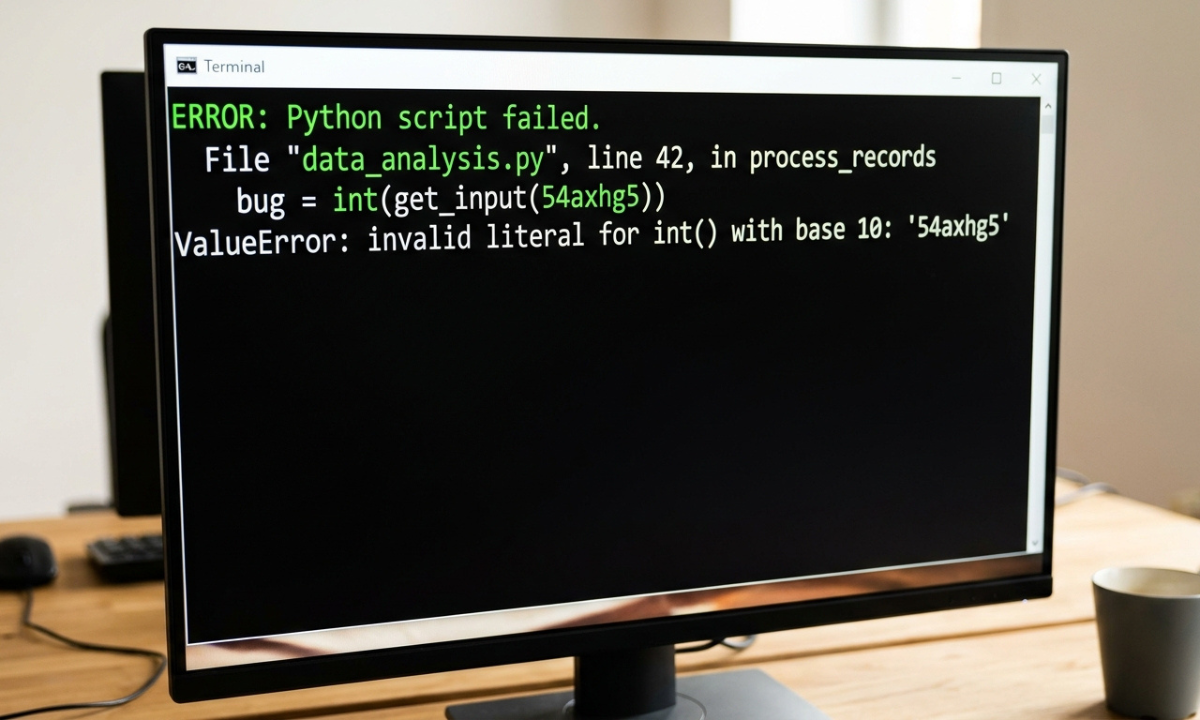
When a Python program stops working, the hardest part is often figuring out what the error message actually means. The phrase python bug 54axhg5 may look like a specific Python error code, but it should not automatically be treated as an official Python exception or standard error identifier.
A reliable troubleshooting process starts with evidence. Instead of guessing what 54axhg5 means, examine the complete error message, traceback, Python version, installed packages, and environment in which the program is running. Python’s own documentation provides a structured approach to understanding errors and exceptions, while Python Packaging documentation explains how dependencies and virtual environments can affect applications. This guide explains how to investigate python bug 54axhg5 step by step without assuming a cause that has not been verified.
What Is Python Bug 54axhg5?
There is no established standard Python exception or official Python error category named 54axhg5 in the Python documentation. Python documents errors such as syntax errors and exceptions, and its traceback system provides information about where an exception occurred and what type of exception was raised.
Therefore, if you encounter python bug 54axhg5, the first step is to determine where that identifier came from. It could be a message generated by a particular application, library, development tool, script, or another component rather than by the Python interpreter itself.
This distinction is important because an unfamiliar identifier should not be given a technical meaning without evidence. The complete traceback or surrounding log information is usually much more useful for identifying the actual problem.
Why Is Python Bug 54axhg5 Difficult to Diagnose?
The main difficulty is that the short identifier 54axhg5 does not, by itself, explain what failed. A useful Python traceback normally contains information about the file involved, the line where execution failed, the chain of calls that led to the failure, and the final exception type and message.
For that reason, searching only for the phrase python bug 54axhg5 may not be enough to diagnose the problem. You need to connect the identifier with the program that produced it and examine the surrounding technical information. A careful troubleshooting process avoids assumptions and gradually eliminates possible causes.
Common Causes of Python Bug 54axhg5
Because 54axhg5 is not established as a standard Python error identifier, there is no verified single cause that can be assigned to it. However, several well-established areas of Python development are worth examining when an unfamiliar error occurs.
These include problems in application code, dependency requirements, Python-version compatibility, and the local environment.
Python Syntax and Coding Problems
Python can report syntax errors when code does not follow the language’s syntax rules. Other failures happen during execution and appear as exceptions.
If python bug 54axhg5 appears while running a particular script, examine the traceback carefully. Pay attention to the file name and line number identified by Python, then inspect the surrounding code. Avoid assuming that the unusual string itself is the coding error. The actual cause may be described elsewhere in the traceback.
Package and Dependency Conflicts
Python applications often rely on third-party packages. Projects can specify dependencies and place version restrictions on those dependencies. The Python Packaging Authority documents dependency specifiers that allow projects to define which package versions or environments are appropriate.
This means an application can encounter problems when its installed packages do not satisfy the requirements expected by the project. If the problem started after installing, removing, or upgrading a package, review those changes carefully before making additional modifications.
Python Version Compatibility Issues
The Python interpreter version is another important diagnostic detail. Projects can specify the Python versions they support, and package metadata can include Python-version requirements.
When investigating python bug 54axhg5, record the Python version used by the program. If several Python installations exist on the computer, make sure the version being checked is the same interpreter that actually runs the application. This simple check can prevent a common troubleshooting mistake: changing packages in one Python environment while the application is running in another.
Environment and Configuration Errors
A Python program depends on more than its source code. The active interpreter, installed packages, environment variables, configuration files, operating system, and working directory can all affect execution.
Virtual environments are designed to provide an isolated Python environment with its own installed packages. This makes them useful when determining whether a problem belongs to the application itself or to a particular local environment.
How to Identify Python Bug 54axhg5
Before attempting a fix, collect as much information as possible about the failure. The goal is to move from an unexplained identifier to a specific, reproducible technical problem.
Reading the Python Traceback
A traceback is one of the most useful pieces of information available when a Python program raises an exception. It can show the sequence of calls that led to the failure and identify the location associated with the exception.
When examining python bug 54axhg5, do not focus only on the last unusual-looking string. Read the complete traceback and identify the exception type, message, file, and line number. The final exception message can provide a much clearer description of the problem than a short identifier alone.
Checking Error Messages and Logs
If the application creates log files, inspect the entries surrounding the failure. Python’s standard logging system supports different severity levels, including informational, warning, error, and critical messages.
The events immediately before an error can be particularly useful. They may show what operation the application was performing when the failure occurred. Keeping the original error output is also useful when comparing the behavior before and after a troubleshooting change.
Finding the Code That Triggers the Bug
Once the traceback identifies a source file and line, inspect the code responsible for that operation. Look at the values being passed to the function and consider which external modules or services the code depends on.
If 54axhg5 does not appear in the traceback but instead appears in a separate message, identify which application or component generated that message. That distinction can prevent you from trying to fix Python itself when the actual problem belongs to another piece of software.
How to Troubleshoot Python Bug 54axhg5 Step by Step
Step 1: Reproduce the Python Bug
Begin by reproducing the problem using the same command, script, input, or workflow that originally caused it.
Save the complete output rather than copying only the phrase python bug 54axhg5. A reproducible failure gives you a reliable reference point for testing potential fixes. If the problem cannot be reproduced, compare the conditions under which it occurs and does not occur. Differences in Python versions, packages, configuration, or input can provide useful clues.
Step 2: Examine the Complete Error Message
Next, record the complete error message and traceback.
Look for:
- The exception type
- The exception message
- The source file
- The line number
- The sequence of function calls
- Any package or module names
- Relevant log entries
This information provides a much stronger basis for troubleshooting than the identifier 54axhg5 alone.
Step 3: Check Your Python Version
Check which Python interpreter is running the application and record its version. This is particularly important when a computer contains multiple Python installations or when a project uses a virtual environment. The purpose is not to upgrade Python immediately. First determine which version is being used and whether that version is compatible with the project and its dependencies.
Step 4: Review Packages and Dependencies
Review the packages installed in the environment and compare them with the project’s declared requirements. Python packaging supports dependency version constraints and environment-specific requirements. A package may therefore require a particular range of versions or only be applicable under certain conditions.
If a package change occurred immediately before the problem appeared, investigate that change before upgrading unrelated packages.
Step 5: Test the Code in a Clean Environment
Creating a fresh virtual environment can help determine whether the problem is caused by the existing environment.
For example: python -m venv .venv
A virtual environment has its own Python environment and installed packages, which makes it useful for testing a project separately from other packages installed on the system. After creating the environment, install only the dependencies required by the project and test the same operation again.
Step 6: Apply the Appropriate Fix
Once you have evidence about the cause, make the smallest reasonable change that addresses it. For example, the solution may involve correcting application code, installing a missing dependency, using a compatible package version, adjusting configuration, or recreating a damaged environment.
There is no reliable universal command that can be described as the fix for python bug 54axhg5 because the identifier itself does not establish the underlying cause.
Step 7: Run Tests to Confirm the Solution
After making a change, reproduce the original operation again. If the application has automated tests, run the relevant tests as well. A successful troubleshooting result should demonstrate that the original failure has been resolved without introducing another problem. Keep track of the change that fixed the issue so the same solution can be applied consistently later.
Practical Ways to Fix Python Bug 54axhg5
Update Python and Required Packages
Updating Python or a dependency can be appropriate when a documented compatibility problem or software defect is involved. However, blindly updating everything can make troubleshooting more difficult because several variables change simultaneously.
A better approach is to identify the relevant package or Python-version requirement first and then make a targeted update. Python’s packaging tools support installing and upgrading packages within an appropriate environment.
Resolve Dependency Conflicts
If two packages require incompatible versions of another package, the dependency requirements need to be examined carefully. Check the project’s declared dependencies and the versions installed in the active environment. Python Packaging documentation provides standardized mechanisms for specifying dependency and version requirements.
Once the conflicting requirement is understood, choose versions that satisfy the project’s supported configuration rather than randomly installing the newest available release.
Correct Code or Configuration Problems
If the traceback points to your own source code, investigate that code before changing the Python installation. Review the failing line, its inputs, and any configuration values it depends on. If the problem comes from configuration, compare the current settings with the requirements documented by the application. This approach keeps the troubleshooting process focused and reduces unnecessary changes.
Recreate the Virtual Environment
A virtual environment can be recreated when the existing environment has become difficult to understand or maintain. Because virtual environments are designed to isolate project-specific packages, rebuilding one provides a clean way to test whether the issue is caused by the existing package installation. Keep a reliable dependency definition so the required packages can be installed again consistently.
How to Verify That Python Bug 54axhg5 Is Fixed
Run the Program Again
Repeat the same action that originally produced the error. If the original message no longer appears, that is a useful sign, but it should not be the only verification step.
Test the Affected Function
Test the specific function, command, or workflow that previously failed. For example, if the problem occurred while importing a module, test the complete application path that uses that module rather than checking only whether the import succeeds. This helps confirm that the underlying functionality works as expected.
Monitor Logs for Recurring Errors
Continue monitoring the application’s output or logs after the initial fix. A problem may appear only under particular inputs or conditions. Keeping an eye on logs can reveal whether the same error or a related problem returns. Good logging can also make future troubleshooting easier because it provides a record of what the application was doing before a failure.
How to Prevent Python Bug 54axhg5 in the Future
Keep Python Dependencies Organized
Maintain a clear record of the packages required by the project and the versions that are known to work. Python packaging supports dependency declarations and version constraints, which can help projects communicate their requirements clearly. A reproducible dependency setup makes it easier to recreate an environment and reduces uncertainty when moving a project to another machine.
Use Virtual Environments
Use a separate virtual environment for projects with different dependencies. Python’s virtual-environment system provides isolated package environments, allowing different projects to use different installed packages without requiring one shared package installation for everything. This separation can make both development and troubleshooting easier.
Follow Python Coding Best Practices
Write code that is easy to inspect and debug. Use clear function boundaries, meaningful error handling, and useful logging where appropriate.
When something fails, good diagnostic information can reduce the amount of guesswork required to identify the problem. The goal is not to prevent every possible error. It is to make errors easier to understand and resolve.
Test Changes Before Deployment
Test important code and dependency changes before putting them into a production environment. When an update changes Python versions, package versions, configuration, or application code, testing provides an opportunity to catch compatibility problems before they affect users. Keeping development and production environments reproducible also makes unexpected differences easier to investigate.
Final Thoughts
Troubleshooting python bug 54axhg5 is ultimately about identifying the real problem behind an unfamiliar message. Since 54axhg5 is not established as a standard Python error identifier, it is better to investigate its source than to assume that it has one specific meaning.
Start with the complete traceback and error message. Then check the Python interpreter, dependencies, virtual environment, configuration, and application code. Make one targeted change at a time and reproduce the original problem after each change. This evidence-based approach is more reliable than applying a generic fix to an unexplained error. It also creates a troubleshooting process that can be reused for many other Python errors, even when the original message looks unfamiliar.
FAQs About Python Bug 54axhg5
What Is It?
Python bug 54axhg5 is not established in the official Python documentation as a standard Python exception or recognized Python error category. If you encounter this identifier, examine the complete error message and determine which application, library, or tool produced it.
What Are the Common Causes of Python Bug 54axhg5?
There is no verified list of causes specifically associated with 54axhg5. Instead, investigate the normal sources of Python failures, including application-code errors, dependency requirements, Python-version compatibility, configuration problems, and environment issues.
How Can I Diagnose Python Bug 54axhg5?
Start by reproducing the problem and saving the complete traceback or error output. Then check the exception type, source file, line number, Python version, installed packages, and relevant logs.
Can Updating Python Fix Python Bug 54axhg5?
It can fix a problem when the underlying issue is related to a Python-version compatibility problem or a documented defect addressed by a newer release.
How Can I Prevent Python Bug 54axhg5 From Happening Again?
Use isolated virtual environments, keep dependencies organized, record supported Python versions, maintain useful logs, and test changes before deployment.


